10 Tested Cocoa Powder in Coffee Hacks You Need to Try
One teaspoon of unsweetened cocoa powder can turn a boring cup of black coffee into something that tastes like a $6 mocha. I’m not exaggerating. These cocoa powder in coffee hacks are the cheapest upgrade I’ve ever made to my morning routine.
The problem? Most people just dump cocoa into a hot mug, stir once, and end up with a gritty, clumpy mess floating on top. Then they assume cocoa in coffee doesn’t work. It does — you just need the right technique.
I’ve spent the last three years testing different cocoa types, ratios, and methods across every brewing setup I own. French press, drip, espresso, cold brew — I’ve tried them all. These are the 10 cocoa powder in coffee hacks that actually delivered, ranked by how often they show up in my own kitchen.
Key Points:
- 1 teaspoon of unsweetened cocoa powder per 8 oz cup is the ideal starting ratio
- The paste method (mixing cocoa with a splash of hot water first) prevents clumping entirely
- Adding cocoa to coffee grounds before brewing gives the smoothest, most integrated flavor
- Homemade cocoa coffee has ~15 calories vs 290+ for a Starbucks Caffè Mocha
- Dutch-process cocoa works best for coffee — smoother, less acidic, dissolves easier
Why Adding Cocoa Powder to Coffee Actually Works
This isn’t just a random flavor mash-up. Coffee and cocoa share over 600 aromatic compounds. They’re flavor cousins.
Both come from roasted tropical seeds. Both develop complex flavor profiles through similar roasting processes. That’s why they blend so naturally — your tongue already expects them together.
Here’s the deal: cocoa also brings theobromine to the party. It’s a mild stimulant related to caffeine but smoother — less jittery, more sustained. Adding cocoa powder to coffee gives you a gentle one-two punch of both compounds.
The flavor result? Think dark chocolate meets fresh espresso. Slightly bitter, slightly sweet, with a richness that plain coffee can’t match. No sugar required.
I personally think cocoa in black coffee tastes better than most café mochas. Bold opinion, but I stand by it after hundreds of cups.
Best Type of Cocoa Powder for Coffee
Not all cocoa powders are created equal. Picking the wrong one is the #1 reason people get disappointing results.
| Cocoa Type | Flavor Profile | Acidity | Best For | Dissolves Easily? |
|---|---|---|---|---|
| Dutch-Process | Smooth, mellow, dark chocolate | Low | Coffee (all methods) | Yes — best option |
| Natural (Unsweetened) | Sharp, fruity, slightly bitter | Higher | Bold black coffee | Moderate |
| Raw Cacao Powder | Intense, earthy, very bitter | Medium | Health-focused drinks | Harder to dissolve |
| Hot Chocolate Mix | Sweet, artificial, milky | Low | ❌ Not recommended | Yes, but too sugary |
Dutch-process cocoa is my go-to for coffee. It’s been alkali-treated, which neutralizes acidity and creates a darker color. The flavor is rounder, smoother, and less harsh than natural cocoa.
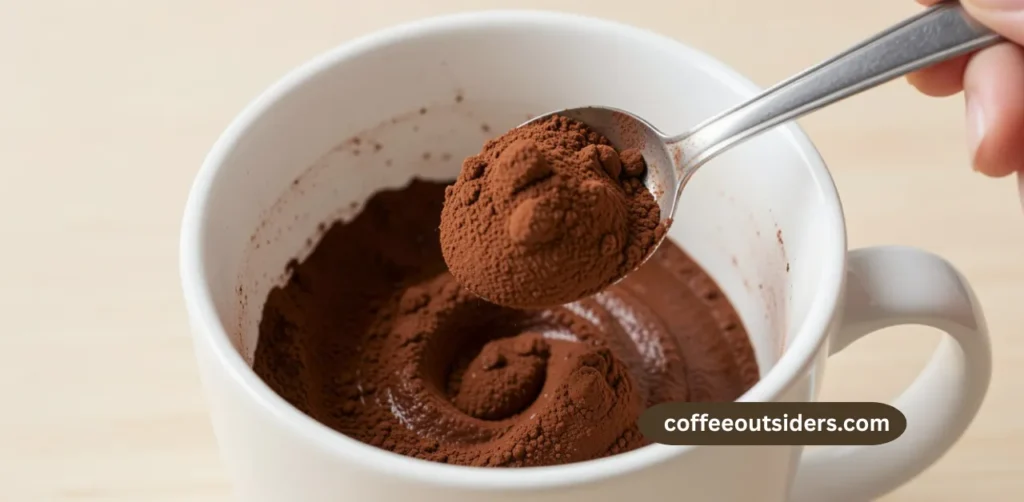
📝 Quick Note: Hot chocolate mix is NOT the same as cocoa powder. It’s loaded with sugar, powdered milk, and fillers. A single packet can add 100+ calories and 15g of sugar to your coffee. Use pure unsweetened cocoa powder instead.
Brands matter too. After testing about a dozen, I keep coming back to Ghirardelli Unsweetened Dutch-Process and Hershey’s Special Dark. Both dissolve well and taste great in coffee.
Raw cacao powder in coffee works if you’re after maximum antioxidants. Just know it’s more bitter and grainier. I’ve found it’s best paired with a fat source like cream or coconut oil to smooth things out.
How Much Cocoa Powder to Add to Coffee (Exact Ratios)
The answer isn’t just “a teaspoon.” Your cup size matters.
| Cup Size | Cocoa Powder Amount | Taste Result |
|---|---|---|
| Espresso shot (2 oz) | ¼ teaspoon | Subtle chocolate hint |
| Small cup (6 oz) | ¾ teaspoon | Light mocha flavor |
| Standard mug (8 oz) | 1 teaspoon | Perfect balance — my sweet spot |
| Large mug (12 oz) | 1½ teaspoons | Rich chocolate-coffee blend |
| Travel mug (16 oz) | 2 teaspoons | Strong cocoa presence |
Start with 1 teaspoon per 8 ounces. That’s the ratio I recommend to anyone trying this for the first time.
But here’s the thing: these amounts assume unsweetened cocoa powder in coffee with no milk or cream. If you’re adding dairy, bump up by ¼ teaspoon — milk dilutes the cocoa flavor fast.
Too much cocoa turns your coffee chalky and bitter. I learned this by enthusiastically heaping a tablespoon into a small mug. It tasted like coffee-flavored dirt. Don’t be me.
10 Cocoa Powder in Coffee Hacks You Need to Try
These aren’t generic “just add cocoa” suggestions. Each hack is a specific technique I’ve tested in my own kitchen. Some are dead simple. Others take 60 seconds of extra effort that’s 100% worth it.
Hack #1: The Anti-Clump Paste Method
This is the single most useful cocoa powder in coffee hack I know. It fixes the #1 complaint — clumps.
Put your cocoa powder in the bottom of your mug. Add 1–2 tablespoons of hot water (NOT your full coffee). Stir vigorously with a small spoon or fork until you get a smooth, shiny paste. Then pour your brewed coffee over it.
💡 Pro Tip: The paste should look like melted chocolate — no dry spots, no lumps. If it’s still grainy, you didn’t add enough liquid or didn’t stir long enough. This takes about 15 seconds. That’s it.
The result is cocoa that’s perfectly integrated into your coffee. No grit at the bottom. No floating clumps. Smooth every single sip.
Hack #2: Brew Cocoa Into Your Coffee Grounds
This one surprised me. Mix 1 teaspoon of cocoa powder directly into your dry coffee grounds before brewing.
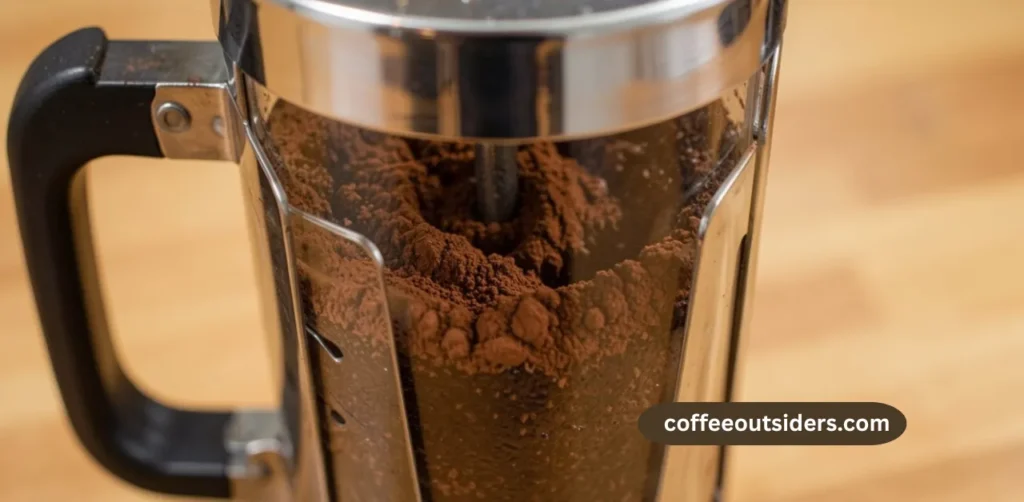
The hot water extracts flavor from both the coffee and cocoa simultaneously. You get a deeply integrated chocolate-coffee flavor that’s impossible to replicate by stirring cocoa into a finished cup.
This works best in a drip machine or French press. I’ve tested it in a pour-over too — beautiful results. The cocoa mellows coffee’s bitterness and adds a chocolate finish that lingers.
Hack #3: The Cinnamon-Cocoa Duo
Coffee with cocoa powder and cinnamon is a combination I make at least four times a week. It’s that good.
Add 1 teaspoon of cocoa and ¼ teaspoon of ground Ceylon cinnamon per cup. The cinnamon adds warmth and subtle sweetness without any sugar. Together they create a flavor that tastes way more complex than two simple pantry spices should.
Here’s why that matters: cinnamon helps regulate blood sugar. Paired with cocoa’s flavonoids, you’ve got a functional upgrade that actually tastes incredible.
Hack #4: Mexican Mocha Spice Hack
Add 1 teaspoon cocoa, ¼ teaspoon cinnamon, and a tiny pinch of cayenne pepper to your coffee. Emphasis on TINY. Like, tap-the-cayenne-container-once tiny.
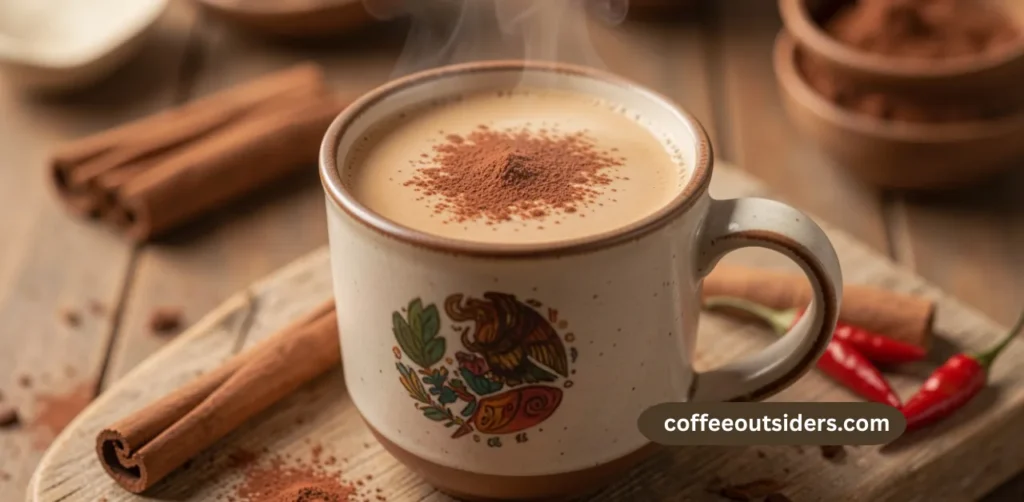
The cayenne creates a slow, warm heat at the back of your throat. Not spicy-painful. More like a whisper. The Aztec civilization drank cacao with chili centuries ago — and they were onto something.
I’ve served this to guests without warning them about the cayenne. Every single one asked what the “secret ingredient” was.
Hack #5: Overnight Cocoa Cold Brew
Mix 1 tablespoon of cocoa powder into your cold brew grounds before steeping overnight. Use your normal cold brew ratio — roughly 1 cup of coarsely ground coffee per 4 cups of cold water.
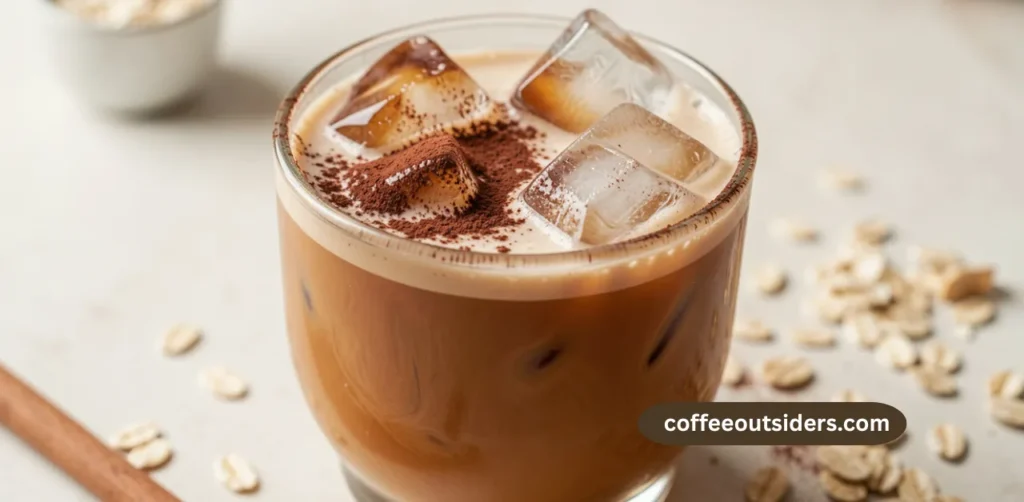
The long, slow extraction pulls cocoa flavor without any bitterness. After 12–16 hours in the fridge, strain it like normal.
💡 Pro Tip: Add the cocoa BEFORE the water, mixed in with the dry grounds. If you add it to the water directly, it tends to clump and float. Mixing it with the grounds solves this. I’ve timed the difference — 12 hours minimum for full cocoa extraction.
The result is a chocolate cold brew that tastes like you ordered it from a specialty café. Serve over ice with a splash of oat milk. Unreal.
Hack #6: Bulletproof Cocoa Coffee
Blend 1 teaspoon cocoa powder, 1 tablespoon grass-fed butter or coconut oil, and your hot coffee in a blender for 15 seconds.
Cocoa powder is fat-soluble. That means the cocoa flavor BLOOMS when it hits fat. This is why café mochas taste so rich — they use whole milk or cream. The bulletproof version gets the same effect with healthy fats.
The blender creates a frothy, latte-like texture. I use this on mornings when I need sustained energy through lunch.
Hack #7: The Cocoa-Rimmed Mug
Dampen the rim of your mug with a wet finger or paper towel. Dip it into a small plate with a mix of 1 tablespoon cocoa powder and 1 teaspoon coconut sugar.
Yes, it’s purely aesthetic. And yes, it makes your morning coffee feel like an event. Every sip picks up a tiny hit of chocolate sweetness from the rim.
I do this when I have company over. Takes 10 seconds and gets a reaction every time.
Hack #8: Vanilla-Cocoa Dessert Coffee
Add 1 teaspoon cocoa powder and ¼ teaspoon pure vanilla extract to your brewed coffee. This tastes like liquid chocolate cake. I’m not overstating it.
The vanilla rounds out cocoa’s bitterness and adds a dessert-like quality without any added sugar. Use real vanilla extract though — not imitation. The flavor difference is dramatic.
So what does this mean? You’ve got a 5-calorie dessert in a mug. After dinner, this replaces actual dessert for me about three nights a week.
Hack #9: Cocoa Protein Coffee
Brew your coffee, let it cool for 2 minutes, then blend it with 1 teaspoon cocoa powder and 1 scoop of chocolate or vanilla protein powder.
The cooling step matters. Protein powder clumps horribly in boiling liquid. Two minutes brings it to the sweet spot — warm enough to enjoy, cool enough to blend smoothly.
I drink this as a pre-workout on training days. You get caffeine, protein, and the mood-boosting theobromine from cocoa in one glass.
Hack #10: The Honey-Cocoa Sugar Swap
Replace your usual sugar or sweetener with ½ teaspoon of raw honey mixed into your cocoa paste. Make the cocoa paste first (Hack #1), stir in the honey, THEN add coffee.
Honey and cocoa are a natural pairing. The floral sweetness of honey softens cocoa’s edge without masking the coffee flavor underneath. I prefer this over any artificial sweetener I’ve tried.
And the best part? Raw honey adds trace enzymes and minerals that processed sugar doesn’t. Small amounts won’t spike your blood sugar like a Starbucks pump of syrup.
How to Add Cocoa Powder to Coffee by Brewing Method
The “right” way to add cocoa depends on your setup. Here’s my tested guide:
| Brewing Method | When to Add Cocoa | Amount per Cup | Special Notes |
|---|---|---|---|
| Drip Machine | Mix into dry grounds before brewing | 1 tsp per cup | Most integrated flavor |
| French Press | Add to grounds before steeping | 1 tsp per cup | Press filters out undissolved cocoa |
| Pour-Over | Paste method in mug, pour coffee over | 1 tsp per cup | Don’t add to the V60 filter — it clogs |
| Espresso | Paste in cup, pull shot over it | ¼ tsp per shot | Creates instant mini-mocha |
| Cold Brew | Mix into dry grounds before steeping | 1 tbsp per batch | Steep minimum 12 hours |
| AeroPress | Add to chamber with grounds | ½ tsp per cup | Invert method works best |
💡 Pro Tip: The French press is secretly the best brewing method for cocoa coffee. The metal mesh filter lets fine cocoa particles through, creating a thicker body and richer mouthfeel. Paper filters in drip and pour-over trap some of those particles — and some flavor with them.
I personally use the pour-over paste method on weekday mornings (fast) and the French press grounds method on weekends (better flavor, worth the extra cleanup).
Cocoa Coffee vs Starbucks Mocha — Nutrition Showdown
Here’s why I stopped ordering café mochas. The calorie difference is staggering.
| Nutrient (12 oz serving) | Your Homemade Cocoa Coffee (black) | Starbucks Caffè Mocha (no whip) | Starbucks Caffè Mocha (with whip) |
|---|---|---|---|
| Calories | 15 | 290 | 360 |
| Total Fat | 0.5 g | 10 g | 15 g |
| Sugar | 0 g | 35 g | 35 g |
| Fiber | 1.5 g | 2 g | 2 g |
| Protein | 1 g | 10 g | 10 g |
| Caffeine | 100–120 mg | 95 mg | 95 mg |
| Cost | ~$0.15 per cup | ~$5.75 | ~$6.25 |
You’re looking at 15 calories vs 360. Zero sugar vs 35 grams. And you’re saving roughly $5.60 per cup.
Over a year of daily mochas, that’s $2,044 saved. I did the math because I’m the kind of person who does the math. It’s what finally pushed me to switch.

The cocoa in coffee for weight loss angle is real — simply because you’re dodging massive amounts of added sugar and dairy fat. According to the USDA Food Data Central database, one tablespoon of unsweetened cocoa powder contains just 12 calories and 0.7 grams of fat.
Health Benefits of Cocoa Powder in Coffee
The cocoa powder in coffee benefits go beyond flavor. There’s solid research here.
According to Harvard T.H. Chan School of Public Health, cocoa is one of the richest dietary sources of flavonoids — plant compounds linked to cardiovascular health and reduced inflammation. A single tablespoon of cocoa contains approximately 175 mg of flavonoids.
The antioxidant load is impressive. Research published in the Journal of Agricultural and Food Chemistry found that cocoa powder contains more antioxidant activity per gram than most fruits — including blueberries and açaí.
Other documented benefits:
- Cardiovascular support — flavonoids may help lower blood pressure and improve blood flow
- Mood enhancement — theobromine and trace amounts of phenylethylamine support alertness and mood
- Anti-inflammatory compounds — polyphenols in cocoa may reduce inflammation markers
- Blood sugar regulation — some studies link cocoa flavanols to improved insulin sensitivity
📝 Quick Note: These benefits apply to unsweetened cocoa powder — not chocolate bars, hot chocolate mixes, or sugary mocha syrups. The processing and added sugar in those products cancel out most of the health advantages. Also, cocoa doesn’t replace medical treatment. If you have a health condition, talk to your doctor.
One thing I genuinely appreciate about cocoa in coffee: the antioxidants from cocoa STACK with the antioxidants already in coffee. You’re not replacing one with the other. You’re combining them.
Best Cocoa-and-Coffee Flavor Pairings
Cocoa opens the door to dozens of combinations. Here are my 7 favorites, tested and ranked:
| Add-In | Amount (per 8 oz) | Flavor Profile | How Much I Like It (1-10) |
|---|---|---|---|
| Cinnamon | ¼ tsp | Warm, spicy-sweet, cozy | 10 |
| Vanilla extract | ¼ tsp | Dessert-like, smooth | 9 |
| Cayenne pepper | Tiny pinch | Slow heat, Aztec-inspired | 8 |
| Cardamom | ⅛ tsp | Exotic, floral, complex | 8 |
| Coconut cream | 1 tbsp | Tropical, rich, silky | 7 |
| Nutmeg | Pinch | Holiday-inspired, warm | 7 |
| Peppermint extract | 2 drops | Mint mocha, refreshing | 6 |
Cinnamon and vanilla are the two I rotate most. The cardamom surprised me — it transforms cocoa coffee into something you’d find at a specialty café in Istanbul.
The truth is: most of these add-ins cost pennies per cup. You can build a rotation of five or six completely different-tasting coffees from the same beans just by changing what you pair with cocoa.
5 Mistakes That Ruin Cocoa Powder in Coffee
I’ve made every single one of these. Learn from my failures.
Mistake #1: Dumping cocoa straight into hot coffee.
It clumps instantly. Always use the paste method (Hack #1) or mix it into your grounds before brewing (Hack #2). Direct-dump is the fastest path to gritty, disappointing coffee.
Mistake #2: Using hot chocolate mix instead of cocoa powder.
Hot chocolate mix contains sugar, powdered milk, and other fillers. It’ll turn your coffee into a cloyingly sweet mess. Can you put cocoa powder in coffee? Yes. Can you put hot chocolate mix in? Technically — but you shouldn’t.
Mistake #3: Adding too much cocoa.
More than 2 teaspoons per 8 oz creates a chalky, mud-like texture. Cocoa absorbs liquid. Overdoing it thickens your coffee in an unpleasant way. Start with 1 teaspoon. Adjust from there.
Mistake #4: Using boiling water for the paste.
Water just off the boil can scorch cocoa and make it taste burnt. Aim for 170–180°F for the paste. That’s about 30 seconds off a full boil.
Mistake #5: Not stirring enough.
A quick swirl isn’t enough. Cocoa needs 15–20 seconds of aggressive stirring — or a quick hit with a milk frother — to fully integrate. Does cocoa powder dissolve in coffee completely? Not quite. It suspends. Proper stirring keeps it suspended evenly.
Conclusion:
Adding cocoa powder to coffee is the cheapest, simplest upgrade I’ve ever made to my daily routine. Start with 1 teaspoon of Dutch-process cocoa per cup using the paste method. That’s your baseline. From there, experiment — add cinnamon, try it cold-brewed, or go full Mexican Mocha on a weekend morning. I’ve been doing this for years and still haven’t gotten bored. Your mug, your rules. Try these cocoa powder in coffee hacks and taste the difference yourself.

Zaibi
Zaibi blends compelling storytelling with strong digital expertise at Coffee Outsiders. With a background in SEO and content strategy, he ensures articles about coffee beans, brewing, tea, and drinks are both engaging and easy to discover online.
Frequently Asked Questions
You can, but it’ll probably clump. Cocoa powder is hydrophobic — it resists water. The best approach is the paste method: mix cocoa with a small splash of hot water first, stir into a smooth paste, then add your coffee. Alternatively, mix cocoa into your dry coffee grounds before brewing. Both methods give you clump-free results.
Not completely. Cocoa powder doesn’t truly dissolve — it suspends in liquid. That’s why you’ll often see sediment at the bottom of your mug after it sits for a while. The paste method and thorough stirring keep it evenly suspended. Dutch-process cocoa suspends better than natural cocoa because of its finer texture and lower acidity.
According to Harvard T.H. Chan School of Public Health, cocoa is rich in flavonoids that support heart health and reduce inflammation. One tablespoon of unsweetened cocoa adds just 12 calories, 1.5 grams of fiber, and about 175 mg of flavonoids. You’re adding significant antioxidant value with almost zero caloric cost.
Start with 1 teaspoon of unsweetened cocoa per 8 oz cup. For a stronger chocolate flavor, go up to 1½ teaspoons. Anything beyond 2 teaspoons per cup gets chalky. If you’re using a larger mug, scale proportionally: 2 teaspoons for 16 oz.
Cacao powder in coffee comes from raw, unroasted cacao beans. It’s less processed and retains more nutrients — but it’s also more bitter and harder to dissolve. Cocoa powder is made from roasted cacao beans, giving it a mellower, more familiar chocolate flavor. For most coffee drinks, regular unsweetened cocoa powder tastes better. Cacao is the choice if maximum antioxidant content is your priority.
Barely. One tablespoon of cocoa powder contains roughly 12 mg of caffeine, according to the USDA. Your 8 oz coffee already has 80–100 mg. The cocoa bump is minimal — about a 10–12% increase. You WILL get theobromine from the cocoa though, which provides a milder, longer-lasting energy boost.
I strongly advise against it. Hot chocolate mix contains added sugar (often 15+ grams per packet), powdered milk, and artificial flavors. It’ll turn your coffee overly sweet and mask the actual coffee flavor. If you want chocolate flavor without junk, use pure unsweetened cocoa powder. The FDA doesn’t regulate “hot chocolate mix” the same way it regulates pure cocoa, so ingredient quality varies wildly.
Close, but different. A café mocha uses chocolate syrup, steamed milk, and espresso. Cocoa powder in coffee gives you the chocolate note without the sweetness or creaminess. It’s more like dark-chocolate coffee than a dessert drink. Add a splash of cream and a touch of honey, and you’ll get closer to mocha territory — still with far fewer calories.
Most intermittent fasting experts say no. One teaspoon of cocoa powder has about 4 calories and negligible protein/carbs. That’s well below the 50-calorie threshold most fasting protocols consider “breaking” a fast. If you’re doing strict water-only fasting, skip it. For standard 16:8 intermittent fasting, you’re fine.
Yes — but technique matters. Cocoa clumps worse in cold liquid than hot. Your best bet: make the cocoa paste with a splash of hot water first, then stir it into your cold or iced coffee. For cold brew, mix cocoa into the grounds before steeping overnight. Both methods work. Just don’t dump dry cocoa into a cold glass.