

Coconut Pineapple Cottage Cheese Muffins (Moist & High-Protein!)
You’ve been there. You grab a “healthy” muffin from the store, take one hopeful bite, and — thud. Dense. Dry. Flavorless. Like eating a protein-flavored hockey puck.
And if you’ve ever tried baking high-protein muffins at home, you know the struggle. They’re either rubbery, weirdly eggy, or just… sad. You wanted tropical and fluffy. You got gym-locker and gummy.
Here’s the thing nobody tells you: cottage cheese is the secret weapon that changes everything.
These coconut and pineapple cottage cheese muffins are genuinely moist, packed with real tropical flavor, and deliver about 8–10 grams of protein per muffin. I’ve made this recipe more times than I can count, tweaked it obsessively, and I’m handing you the version that actually works — no guessing, no dry muffins, no regrets.
Stick with me and I’ll walk you through exactly how to make them, why cottage cheese makes them so good, AND which coffee to drink alongside them. ☕
💡 My Experience: I’ve been experimenting with high-protein baking for over 4 years, testing everything from Greek yogurt to silken tofu in muffin recipes. After dozens of failed batches (RIP, gummy banana-protein muffins of 2021), I can tell you that full-fat cottage cheese consistently produces the most tender, moist crumb of anything I’ve tried. These tropical muffins are now a weekly staple in my kitchen — and they disappear fast.
What Are Coconut Pineapple Cottage Cheese Muffins?
Coconut and pineapple cottage cheese muffins are a high-protein baked good that uses blended or whole-milk cottage cheese as the primary moisture and protein source, combined with crushed pineapple and shredded coconut for tropical flavor.
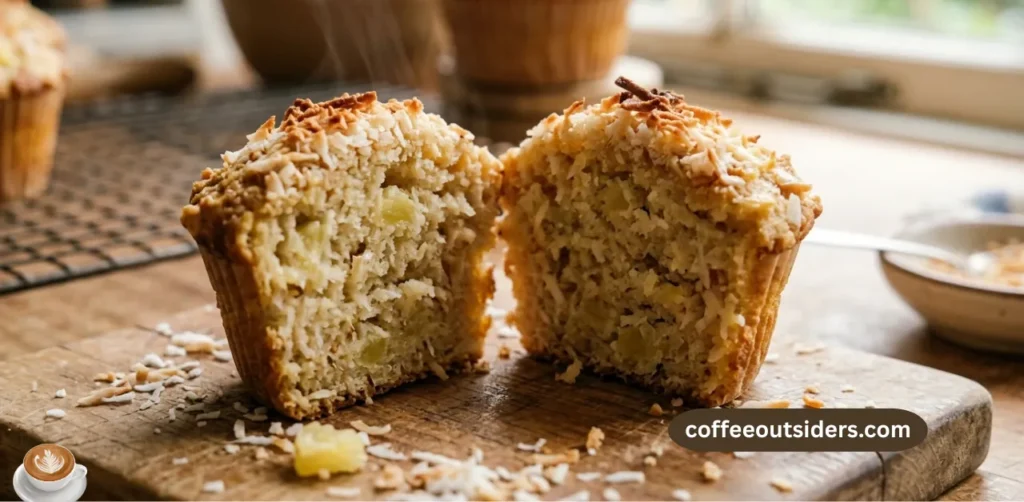
Unlike traditional muffins that rely on butter and sugar for richness, these swap in cottage cheese — giving you a tender, moist crumb with significantly more protein and less saturated fat.
The result? A muffin that genuinely tastes like a piña colada decided to grow up, get healthy, and become your breakfast.
⚡ Key Takeaway (Featured Snippet): Coconut pineapple cottage cheese muffins are protein-rich tropical muffins made with blended cottage cheese, crushed pineapple, and shredded coconut. They’re moist, lightly sweet, and deliver 8–10g of protein per muffin — making them an ideal healthy breakfast or snack.
Why Cottage Cheese Makes These Muffins Special
This is the part most recipes completely skip over — and it’s actually fascinating.
The Science Behind It
When you blend cottage cheese smooth (or use small-curd directly in batter), here’s what happens:
- Protein networks form during baking — casein and whey proteins in cottage cheese create a tender structure that holds moisture better than butter alone
- The fat content in full-fat cottage cheese coats flour proteins the way butter does, resulting in a soft, not rubbery crumb
- Natural lactic acid in cottage cheese reacts with baking soda, helping your muffins rise beautifully
Can You Taste the Cottage Cheese?
Nope. Not even a little.
Once baked with pineapple and coconut, the cottage cheese completely disappears flavor-wise. What it leaves behind is pure magic: moisture, structure, and protein. That’s it.
💡 Pro Tip: Always blend your cottage cheese smooth before adding it to the batter if you want zero lumps and a perfectly even crumb. A 30-second blitz in a blender or food processor does the trick.
Ingredients You’ll Need
Here’s your full shopping list. I’ll flag which brands I personally use and why.
Dry Ingredients
- 1½ cups all-purpose flour (or sub oat flour for a heartier muffin — Bob’s Red Mill works great)
- 1½ tsp baking powder
- ½ tsp baking soda
- ¼ tsp salt
- ½ cup shredded unsweetened coconut (Trader Joe’s has a fantastic one)
- ¼ cup coconut sugar (or regular granulated sugar — your call)
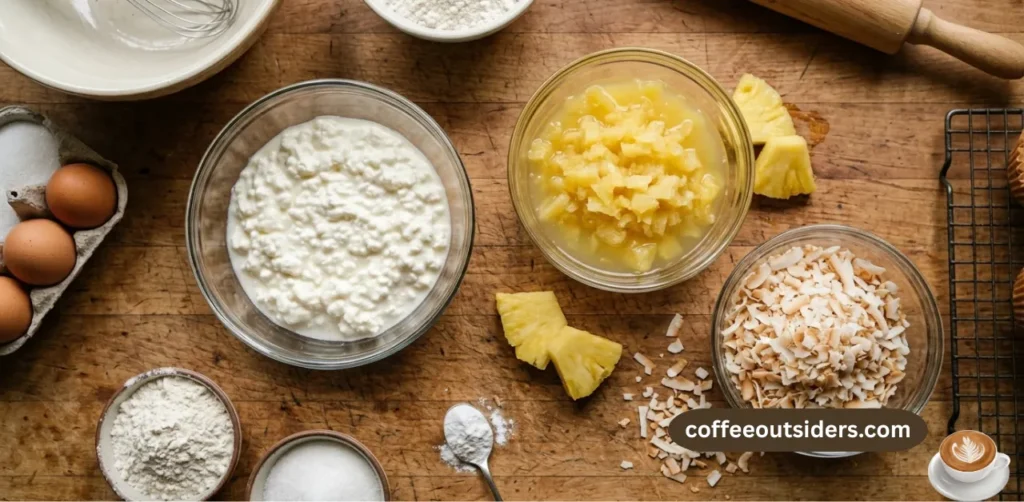
Wet Ingredients
- 1 cup full-fat cottage cheese (Good Culture is my go-to — creamier and less watery)
- 1 cup crushed pineapple, drained well (Dole canned, pressed through a fine mesh sieve)
- 2 large eggs
- ¼ cup coconut oil, melted (refined if you want mild flavor, unrefined for extra coconut punch)
- 1 tsp pure vanilla extract (Nielsen-Massey if you can find it — the flavor difference is real)
- 2 tbsp honey or maple syrup (optional, for a touch more sweetness)
Optional Add-ins
- Macadamia nuts (roughly chopped, ¼ cup)
- White chocolate chips (¼ cup — I know, I know, but they’re incredible here)
- Lime zest (½ tsp — this is a game changer, trust me)
Yields: 12 standard muffins Prep time: 10 minutes Bake time: 20–22 minutes at 375°F (190°C)
How to Make Them — Step by Step
Step 1: Prep Your Pineapple (This Step Matters!)
Drain your canned crushed pineapple and then press it through a fine mesh sieve or squeeze it in a clean kitchen towel. You want to remove as much liquid as possible.
Why? Excess pineapple juice = soggy muffin bottoms. Trust me, I learned this the hard way on batch #4.

Step 2: Blend the Cottage Cheese
Add 1 cup of cottage cheese to a blender or food processor. Blitz for 20–30 seconds until completely smooth and creamy.
Set it aside. It should look like thick sour cream at this point.
Step 3: Whisk Dry Ingredients
In a large bowl, whisk together flour, baking powder, baking soda, salt, shredded coconut, and sugar.
Give it a good 30-second whisk to make sure everything is evenly distributed. Lumpy baking powder = uneven rise.
Step 4: Mix Wet Ingredients
In a separate bowl, whisk together:
- Blended cottage cheese
- Drained crushed pineapple
- 2 eggs
- Melted coconut oil
- Vanilla extract
- Honey or maple syrup (if using)
Mix until everything is combined. It’ll look a little chunky from the pineapple — that’s perfectly fine.
Step 5: Combine Wet + Dry
Pour the wet ingredients into the dry ingredients. Fold gently with a spatula until just combined.
Stop mixing the moment you don’t see dry flour streaks. Overmixing develops gluten and turns your muffins tough. Ten folds maximum.
💡 Pro Tip: If your batter looks a tiny bit lumpy — great. Lumpy muffin batter is happy muffin batter. Smooth batter means you’ve overmixed.
Step 6: Fill and Bake
Line a standard 12-cup muffin tin with paper liners or spray with cooking spray.
Fill each cup about ¾ full. Optionally, sprinkle a pinch of extra shredded coconut on top of each muffin before baking — it toasts beautifully and looks gorgeous.
Bake at 375°F (190°C) for 20–22 minutes, until a toothpick inserted in the center comes out clean.
Step 7: Cool (Don’t Skip This!)
Let muffins cool in the tin for 5 minutes, then transfer to a wire rack.
Resist eating them straight from the oven — the cottage cheese needs about 10 minutes to set properly. I know. It’s hard. Be strong.
The CoffeeOutsiders Coffee Pairing Guide ☕
Okay, here’s where CoffeeOutsiders gets to flex. Nobody else is telling you this.

These tropical muffins pair beautifully with specific coffee styles. Here’s my breakdown:
| Muffin Vibe | Best Coffee Pairing | Why It Works |
|---|---|---|
| Classic tropical | Coconut latte (oat milk + 1 pump coconut syrup) | Echoes the coconut flavor, creamy contrast |
| Bright & fruity | Ethiopian light roast pour-over | Fruity acidity mirrors the pineapple |
| Rich & indulgent | Flat white with dark roast | Bitter espresso cuts through muffin sweetness |
| Refreshing | Iced coffee + splash of pineapple juice | Bold but tropical — crazy good |
| Cozy morning | Cinnamon oat milk latte | Warm spice + tropical = unexpected magic |
My personal favorite? A simple pour-over with a Kenyan or Ethiopian bean. The natural berry and citrus notes in those coffees amplify the pineapple flavor in a way that feels almost intentional.
Pro Tips for the Perfect Muffin
After making these approximately 30 times (not an exaggeration), here’s what actually matters:

Use Full-Fat Cottage Cheese
Low-fat cottage cheese has more water content and less fat, which leads to a denser, slightly rubbery muffin. Full-fat is non-negotiable here.
Drain the Pineapple Aggressively
I cannot say this enough. Pineapple holds a lot of liquid. Squeeze it dry in a clean cloth. The batter will thank you.
Room Temperature Eggs
Cold eggs don’t emulsify as well with the other wet ingredients. Set them out 20 minutes before you start.
Don’t Open the Oven Door
Not until at least minute 18. Opening the door drops the temperature and causes muffins to sink in the center.
⚡ Quick Tip: Use an oven thermometer. Most home ovens run 25°F off from what the dial says. Baking at the wrong temp is the number one reason muffins come out wrong.
The Toothpick Test
Insert a toothpick in the center muffin (it bakes slowest). Clean = done. Wet crumbs = 2 more minutes. Dry batter = you needed 5 minutes ago.
Common Mistakes to Avoid
These are the mistakes that ruined my early batches so you don’t have to repeat them:
❌ Not draining the pineapple — soggy bottoms, raw centers, general sadness.
❌ Skipping the blend step — cottage cheese curds don’t fully incorporate and you get weird texture pockets. Blend it.
❌ Overmixing the batter — develops too much gluten, turns muffins into hockey pucks. Fold, don’t stir.
❌ Using sweetened shredded coconut — it makes the muffins cloyingly sweet and the coconut burns on top. Unsweetened only.
❌ Underbaking — cottage cheese needs to fully set or the center stays gummy. Always do the toothpick test.
❌ Skipping the cooling rack — letting muffins sit in a hot tin creates steam that makes bottoms soggy. Cool on a rack.
Variations & Swaps
Make It Gluten-Free
Swap all-purpose flour 1:1 with a quality GF blend (Bob’s Red Mill 1-to-1 works perfectly here). Oat flour also works but makes a slightly denser, heartier muffin.
Make It Dairy-Free
Replace cottage cheese with blended silken tofu (same quantity). You’ll lose some protein but the texture holds up surprisingly well.
Add Tropical Mix-ins
- Mango chunks (¼ cup, fresh or frozen, diced small)
- Passion fruit pulp (2 tbsp — intense flavor boost)
- Toasted macadamia nuts (¼ cup — adds crunch and richness)
Mini Muffin Version
Use a mini muffin tin and reduce bake time to 12–14 minutes at the same temperature. Makes about 24 mini muffins — perfect for meal prep snacks.
Lower Sugar Version
Omit the coconut sugar entirely and rely on the natural sweetness from pineapple and coconut. Add ½ tsp of pure monk fruit sweetener if you want a touch more sweetness without sugar.
💡 Pro Tip: If you add mix-ins like chocolate chips or macadamia nuts, toss them in 1 tsp of flour first. This stops them from sinking to the bottom during baking.
Nutrition Breakdown (Per Muffin)
Based on the base recipe, 12 muffins, using full-fat cottage cheese and no optional add-ins.
| Nutrient | Amount |
|---|---|
| Calories | ~185 kcal |
| Protein | 8–10g |
| Total Fat | 9g |
| Saturated Fat | 6g |
| Carbohydrates | 19g |
| Fiber | 1.5g |
| Sugar | 8g |
| Sodium | 210mg |
Note: These are estimates calculated using standard nutritional data. For precise tracking, use a tool like Cronometer with your exact brands.
Compared to a typical store-bought muffin (~400 calories, 3g protein), these are genuinely impressive.
Final Thoughts
These coconut and pineapple cottage cheese muffins genuinely changed how I think about healthy baking.
For years I thought “high-protein” meant “good for you but kind of sad to eat.” These muffins proved me wrong. They’re moist, tropical, satisfying, and they pair beautifully with your morning coffee. What more could you want?
Give them a go this weekend — and if you make them, drop a comment below and tell me how they turned out! Did you add macadamia nuts? Try a fun variation? I want to hear about it.
And if you’re new here at CoffeeOutsiders — welcome! We’re all about pairing incredible food with even better coffee. Stick around. 🥥☕
Happy brewing — and happy baking!

Zaibi
Zaibi blends compelling storytelling with strong digital expertise at Coffee Outsiders. With a background in SEO and content strategy, he ensures articles about coffee beans, brewing, tea, and drinks are both engaging and easy to discover online.
FAQ
No — you cannot taste cottage cheese at all once these are baked. The tropical flavors from pineapple and coconut completely mask any dairy flavor. What cottage cheese contributes is moisture, protein, and a tender crumb — not flavor.
Yes, you can use fresh pineapple — but you’ll need to chop it very finely and still drain it well. Canned crushed pineapple is actually more consistent in moisture content and easier to work with, which is why I recommend it.
Store in an airtight container at room temperature for up to 2 days, or refrigerate for up to 5 days. For longer storage, freeze individually wrapped muffins for up to 3 months. Thaw overnight in the fridge or microwave for 45–60 seconds.
These muffins are significantly lower in calories and higher in protein than standard muffins, which helps with satiety. At ~185 calories and 8–10g protein each, they can absolutely fit into a calorie-conscious eating plan. They’re not a diet food, but they’re a smart swap.
Yes. Replace each egg with either a flax egg (1 tbsp ground flaxseed + 3 tbsp water, rested 5 minutes) or ¼ cup unsweetened applesauce. The texture will be slightly denser but still good.
The most common causes are: underbaking, opening the oven door too early, overmixing the batter, or too much liquid from undrained pineapple. Check all four of these on your next batch.
I don’t recommend it. Baking soda and baking powder start reacting the moment they hit liquid — if you let the batter sit more than 30 minutes, you’ll lose your rise. Mix and bake the same day.
Good Culture full-fat cottage cheese is my top pick — it’s creamier and less watery than most brands. Daisy full-fat is a great budget option. Avoid any “whipped” style cottage cheese, as the texture is different and doesn’t blend the same way.